Marcel Proust
1871–1922
In Search of Lost Time is the great novel of memory, time and consciousness — a whole world recovered from a single taste.
Signature worksIn Search of Lost Time
📖 Read in BookLab →

Voltaire
1694–1778
Wit, campaigner and conscience of the Enlightenment; Candide remains the sharpest satire ever aimed at easy optimism.
Signature worksCandide · Philosophical Dictionary · Zadig
📖 Read in BookLab →

Denis Diderot
1713–1784
Editor of the Encyclopédie, novelist and dramatist; he embodies the Enlightenment as a living cultural project.
Signature worksThe Encyclopédie · Jacques the Fatalist · Rameau's Nephew
📖 Read in BookLab →

François Rabelais
Франсуа Рабле1494–1553
Monk-physician of gargantuan laughter, whose giants gave literature a whole vocabulary of bawdy, learned, life-affirming excess.
Signature worksGargantua and Pantagruel

Madame de La Fayette
Мадам де Лафайет1634–1693
Author of what many call the first modern psychological novel — a duchess's silent war between passion and virtue at the French court.
Signature worksThe Princess of Clèves

Stendhal
Стендаль1783–1842
Cold-eyed analyst of ambition and love, whose Julien Sorel climbs post-Napoleonic France by ‘the red and the black’ of army and church.
Signature worksThe Red and the Black · The Charterhouse of Parma

Honoré de Balzac
Оноре де Бальзак1799–1850
Titan who built a whole society in prose — the ninety novels of La Comédie humaine, driven by money, desire and Parisian ambition.
Signature worksPère Goriot · Eugénie Grandet · La Comédie humaine

Gustave Flaubert
Гюстав Флобер1821–1880
Martyr of ‘le mot juste,’ whose Madame Bovary perfected the realist novel and stood trial for offending France with a provincial adulteress.
Signature worksMadame Bovary · Sentimental Education

Émile Zola
Эмиль Золя1840–1902
Founder of Naturalism and conscience of the Republic, whose twenty-novel saga and thundering ‘J'accuse…!’ made fiction a force in history.
Signature worksGerminal · Nana · The Rougon-Macquart

Joris-Karl Huysmans
Жорис-Карл Гюисманс1848–1907
Decadent stylist whose Against Nature — a hermit aesthete's catalogue of exquisite sensations — became the ‘breviary of Decadence.’
Signature worksAgainst Nature (À rebours)


Louis-Ferdinand Céline
Луи-Фердинанд Селин1894–1961
Doctor of the poor whose slang-shot, furious Journey to the End of the Night reinvented French prose — a genius shadowed by vile politics.
Signature worksJourney to the End of the Night

André Breton
Андре Бретон1896–1966
‘Pope of Surrealism,’ who wrote its manifestos and, in Nadja, chased chance, dream and desire through the streets of Paris.
Signature worksNadja · Surrealist Manifestos

Jean-Paul Sartre
Жан-Поль Сартр1905–1980
Philosopher-novelist of freedom and dread who declined the Nobel and made ‘existence precedes essence’ a rallying cry of the century.
Signature worksNausea · No Exit · Being and Nothingness
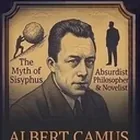
Albert Camus
Альбер Камю1913–1960
Nobel laureate of the absurd, whose lucid, sunlit prose faces a meaningless world with revolt, solidarity and stubborn tenderness.
Signature worksThe Stranger · The Plague · The Myth of Sisyphus

Alexandre Dumas
Александр Дюма1802–1870
The great storyteller of French Romanticism; his swashbuckling novels remain among the world's most adapted.
Signature worksThe Count of Monte Cristo · The Three Musketeers · The Man in the Iron Mask

Jules Verne
Жюль Верн1828–1905
Father of science fiction; his voyages extraordinaires foresaw submarines, spaceflight and a shrinking world.
Signature worksTwenty Thousand Leagues Under the Sea · Journey to the Center of the Earth · Around the World in Eighty Days

Guy de Maupassant
Ги де Мопассан1850–1893
Master of the short story; his spare, unsentimental tales are landmarks of literary Naturalism.
Signature worksBel-Ami · Boule de Suif · The Necklace

Anatole France
Анатоль Франс1844–1924
Nobel laureate (1921); an ironic, elegant skeptic and one of France's most honoured men of letters.
Signature worksPenguin Island · The Gods Are Athirst · Thaïs

André Gide
Андре Жид1869–1951
Nobel laureate (1947) who made sincerity a moral quest, laying bare desire, freedom and self-deception.
Signature worksThe Immoralist · The Counterfeiters · Strait Is the Gate

Colette
Колетт1873–1954
Sensuous chronicler of women's lives; a bold, independent voice and a titan of modern French prose.
Signature worksGigi · Chéri · The Claudine Novels

Georges Bernanos
Жорж Бернанос1888–1948
Catholic novelist of grace and despair; his priests wrestle with sanctity in a fallen world.
Signature worksThe Diary of a Country Priest · Under the Sun of Satan · Mouchette

Marguerite Yourcenar
Маргерит Юрсенар1903–1987
First woman elected to the Académie française; her historical novels are marvels of erudition and poise.
Signature worksMemoirs of Hadrian · The Abyss · Coup de Grâce

Marguerite Duras
Маргерит Дюрас1914–1996
Novelist and filmmaker of memory and desire; her spare, hypnotic prose reshaped modern French writing.
Signature worksThe Lover · Hiroshima mon amour · The Sea Wall