Masters and Luminaries of Greek Letters and Culture
Back to BookLab
BookLab · Greece
Masters and Luminaries of Greek Letters and Culture
The origin of epic, tragedy, philosophy and history — the wellspring to which the West forever returns.
The Literary Universe
This land’s masters across the centuries
★ Suggested first work to enter the reader: Homer — the Odyssey
✦
Poetry
✦

Homer
Ὅμηροςc. 8th century BC
The fountainhead of Western literature; the Iliad and Odyssey set the measure for epic, heroism and the human condition.
Signature worksThe Iliad · The Odyssey · Homeric Hymns
📖 Read in BookLab →

Sappho
Σαπφώc. 630–570 BC
The lyric poet against whom all others are measured; her fragments burn with a directness of feeling unmatched in antiquity.
Signature worksFragments (lyric poetry)
📖 Read in BookLab →
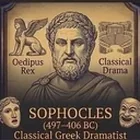
Sophocles
Σοφοκλῆςc. 497–406 BC
Master of tragedy; Oedipus Rex and Antigone frame the eternal collision of fate, law and conscience.
Signature worksOedipus Rex · Antigone · Electra · Ajax
📖 Read in BookLab →

Pindar
Πίνδαροςc. 518–438 BC
The greatest lyric poet of ancient Greece after Sappho; his victory odes set the enduring standard for the poetry of praise.
Signature worksOdes (Olympian · Pythian · Nemean · Isthmian)
📖 Read in BookLab →
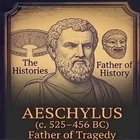
Aeschylus
Αἰσχύλοςc. 525–456 BC
Father of tragedy; he added the second actor and turned ritual into the towering drama of the Oresteia.
Signature worksThe Oresteia · Prometheus Bound · The Persians

Euripides
Εὐριπίδηςc. 480–406 BC
The most modern of the tragedians; he gave voice to women, outcasts and the irrational in the human heart.
Signature worksMedea · The Bacchae · The Trojan Women

Hesiod
Ἡσίοδοςc. 750–650 BC
Earliest Greek poet after Homer; he set down the birth of the gods and the farmer's moral year.
Signature worksTheogony · Works and Days · The Shield of Heracles
✦
Philosophy
✦

Plato
Πλάτωνc. 428–348 BC
In the Republic and the dialogues he founded Western philosophy as the pursuit of the good, the true and the just — and preserved the voice of his teacher Socrates.
Signature worksThe Republic · Symposium · Phaedrus · Apology · Phaedo
📖 Read in BookLab →

Aristotle
Ἀριστοτέλης384–322 BC
The first systematic mind; from ethics to poetics to physics he mapped nearly the whole field of knowledge.
Signature worksNicomachean Ethics · Politics · Poetics · Metaphysics
📖 Read in BookLab →

Heraclitus
Ἡράκλειτοςc. 535–475 BC
The pre-Socratic of flux and fire; his fragments hold that all things flow and that strife is the father of all.
Signature worksFragments (On Nature)
📖 Read in BookLab →

Diogenes
Διογένηςc. 412–323 BC
The Cynic who lived in a jar and mocked convention; philosophy as radical, provocative practice.
Signature worksSayings and Anecdotes (via Diogenes Laërtius) · Cynic teachings
✦
Culture
✦
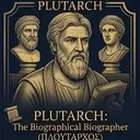
Plutarch
Πλούταρχοςc. 46–120 AD
His Parallel Lives shaped the West's idea of character and virtue by setting Greek against Roman.
Signature worksParallel Lives · Moralia
📖 Read in BookLab →

Aristophanes
Ἀριστοφάνηςc. 446–386 BC
Master of Old Comedy; his satires turned the whole of Athenian life — war, philosophy, politics — into brilliant ridicule.
Signature worksThe Clouds · The Birds · Lysistrata · The Frogs
📖 Read in BookLab →

Longus
Λόγγος2nd century AD
Author of Daphnis and Chloe, the tender pastoral romance that shaped the European love story.
Signature worksDaphnis and Chloe
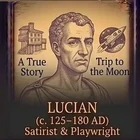
Lucian of Samosata
Λουκιανόςc. 125–180 AD
Satirist of genius; his A True Story is a founding fantasy of voyages to the Moon.
Signature worksA True Story · Dialogues of the Dead · The Sale of Lives
✦
History
✦

Herodotus
Ἡρόδοτοςc. 484–425 BC
The ‘Father of History’; his inquiry into the Greco-Persian Wars invented the writing of history itself.
Signature worksThe Histories
📖 Read in BookLab →

Thucydides
Θουκυδίδηςc. 460–400 BC
In the History of the Peloponnesian War he founded the rigorous, political analysis of events, cause and power.
Signature worksHistory of the Peloponnesian War
📖 Read in BookLab →

Xenophon
Ξενοφῶνc. 430–354 BC
Soldier-historian and pupil of Socrates; his Anabasis recounts the epic march of the Ten Thousand.
Signature worksAnabasis · Hellenica · Memorabilia
A living library
New translated classics are added one at a time.
Back to BookLab